
The Ultimate Baja Marine Life Calendar: When and Where to Meet the Giants
There is a reason Jacques Cousteau famously called the Sea of Cortez "The Aquarium of the World."
Baja California Sur is one of the few places on Earth where the desert meets a sea so rich in life that you don't even need to leave the shore to feel its pulse. But because this ecosystem is governed by ancient migration patterns and shifting currents, timing is everything.
If you are traveling with Vanbaja, you have the ultimate advantage: the freedom to move with the seasons. Whether you want to meet a friendly Gray Whale or swim through a "fever" of thousands of Mobula Rays, here is your month-by-month guide to the wild waters of Baja.
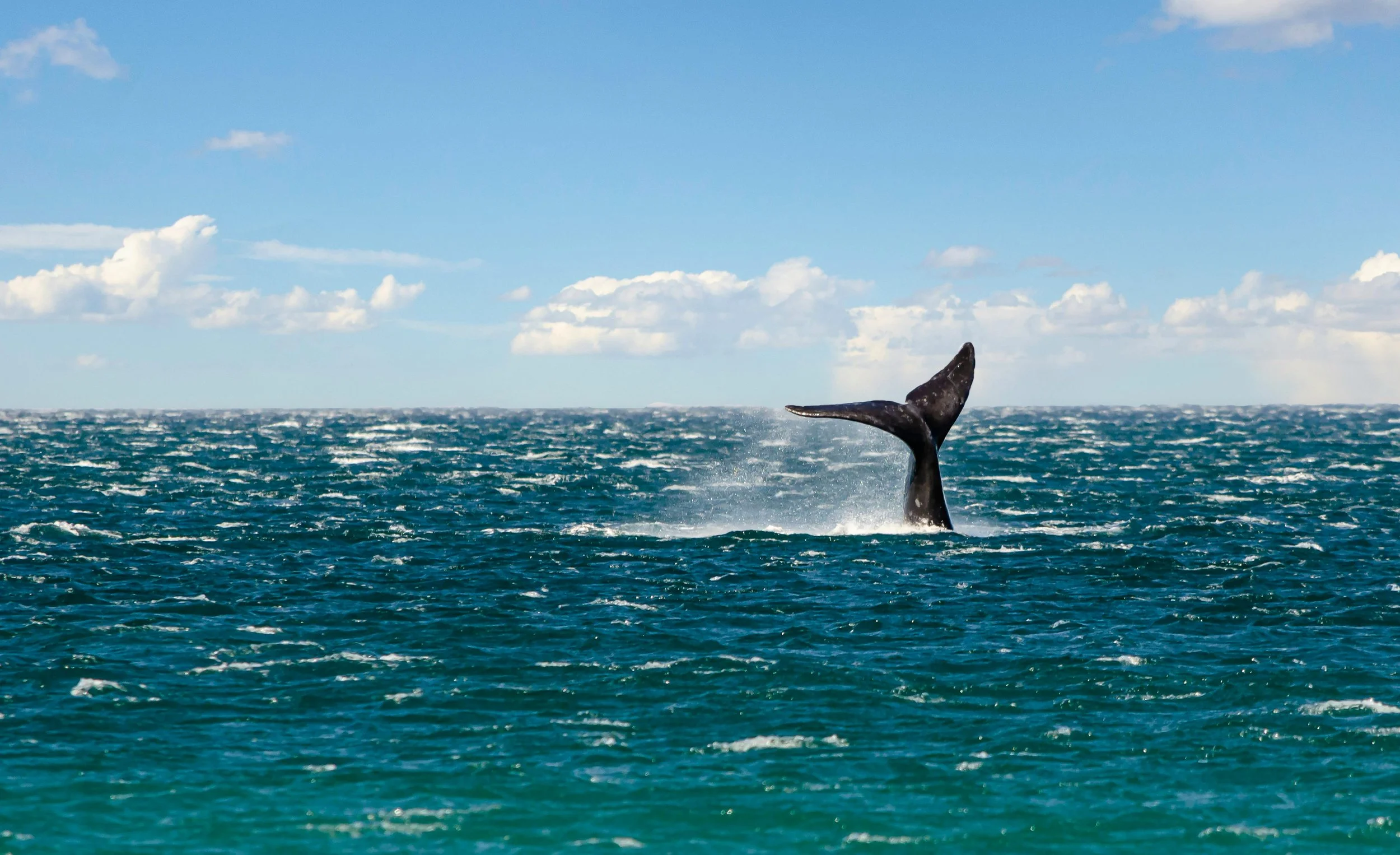
Winter (December – March): The Season of the Giants
Winter is "Whale Season" in Baja. As the waters in the north grow cold, thousands of whales migrate south to the warm, protected lagoons of the peninsula to mate and give birth. It is a period of massive energy and humbling encounters.
The Stars: Gray Whales, Humpback Whales, and Blue Whales.
Where to go:
Bahía Magdalena (Puerto Chale): This is our absolute favorite spot and the closest whale encounter from the Vanbaja headquarters. If you want a massive experience without spending days behind the wheel, Puerto Chale is the place to be.
Guerrero Negro & San Ignacio: This is where the magic happens. Gray whales here are famously "friendly," often approaching boats to interact with humans. This is a legendary road trip further north, best suited for those on a longer journey.
Loreto: The calm waters of the Loreto Bay National Park become home to the Blue Whale; the largest animal to ever live on Earth. Insider Tip: While rare, Blue whales can sometimes be spotted in the bay of La Ventana too!
Cabo San Lucas & The East Cape: These areas are perfect for watching Humpback whales breach and put on a show. The East Cape offers a much quieter, more "van-life" friendly way to see them compared to the busy docks of Cabo.
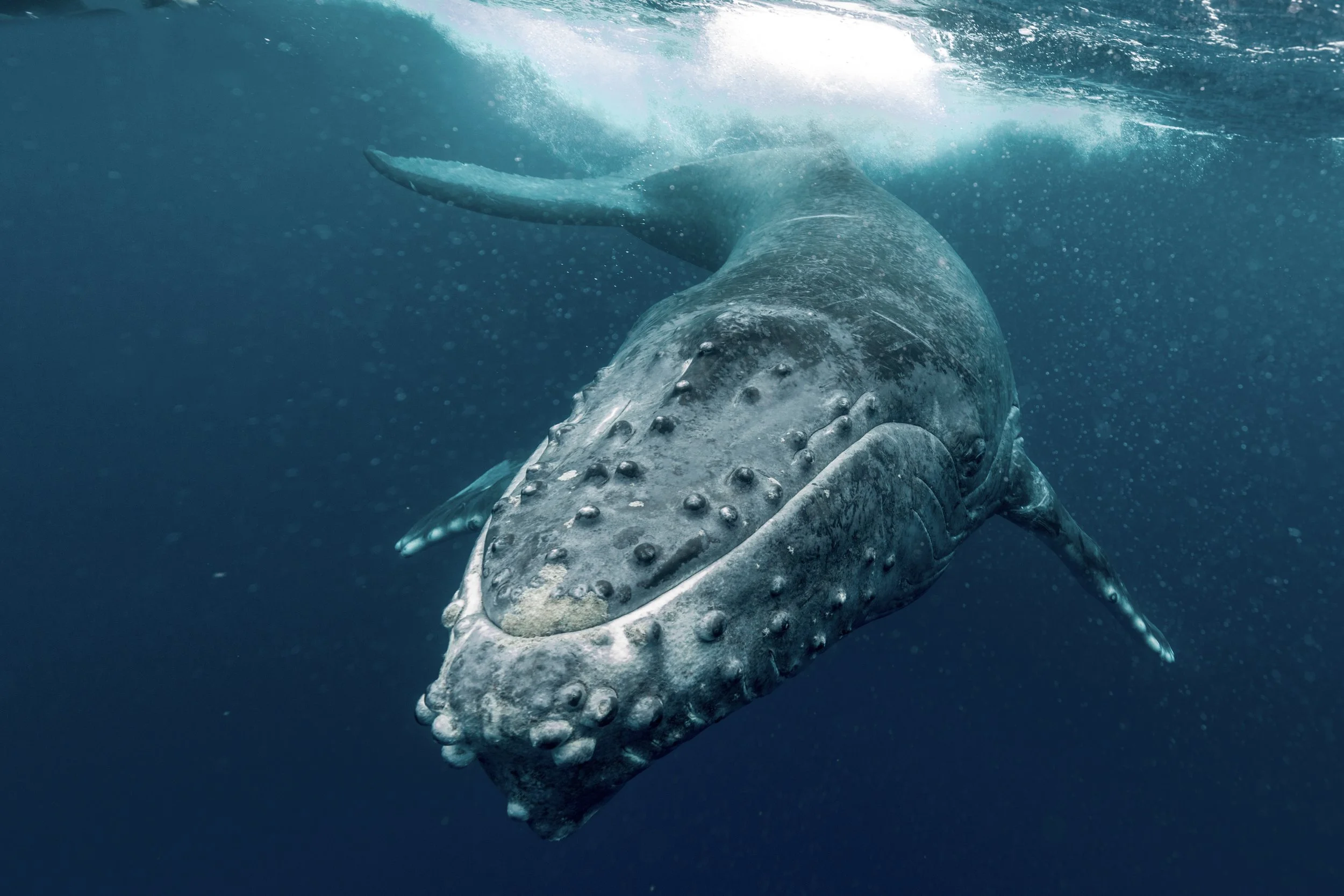
| Humpback Whale
Spring (April – June): The Awakening & The Mobula Magic
As the winter winds die down and the Sea of Cortez turns into a glassy mirror, the peninsula begins to host one of the most surreal wildlife spectacles on the planet. This is a transitional season where the crowds thin out, but the marine action reaches a fever pitch.
The Stars: Mobula Rays (The "Flying" Rays) and Sea Lion Pups.
The Experience: Swimming in a "Fever"Between April and June, tens of thousands of Mobula Rays congregate along the coast in massive groups called "fevers." This is a true once-in-a-lifetime spectacle that defines the spirit of Baja.
The View from Shore: From the door of your Vanbaja van, look out toward the horizon. You’ll likely see hundreds of rays leaping out of the water, performing acrobatic backflips and "flying" through the air before hitting the surface with a loud clap.
The Dive In: This isn't just a spectator sport. You can slip into the water with a snorkel and mask to swim amongst them. Being surrounded by thousands of velvet-like wings gliding through the deep blue is silent, peaceful, and absolutely breathtaking.
Don't forget the Sea Lions: At Espiritu Santo Island (Los Islotes), the sea lion colony is active, and the spring months offer great visibility to watch the pups beginning to explore their underwater world.
Vanbaja Tip: This is the "sweet spot" for van-life. The days are long, the desert is in bloom, and you’ll often find yourself alone on world-class beaches. Park near a quiet cove at sunset; that’s often when the Mobulas start their most spectacular jumping displays.
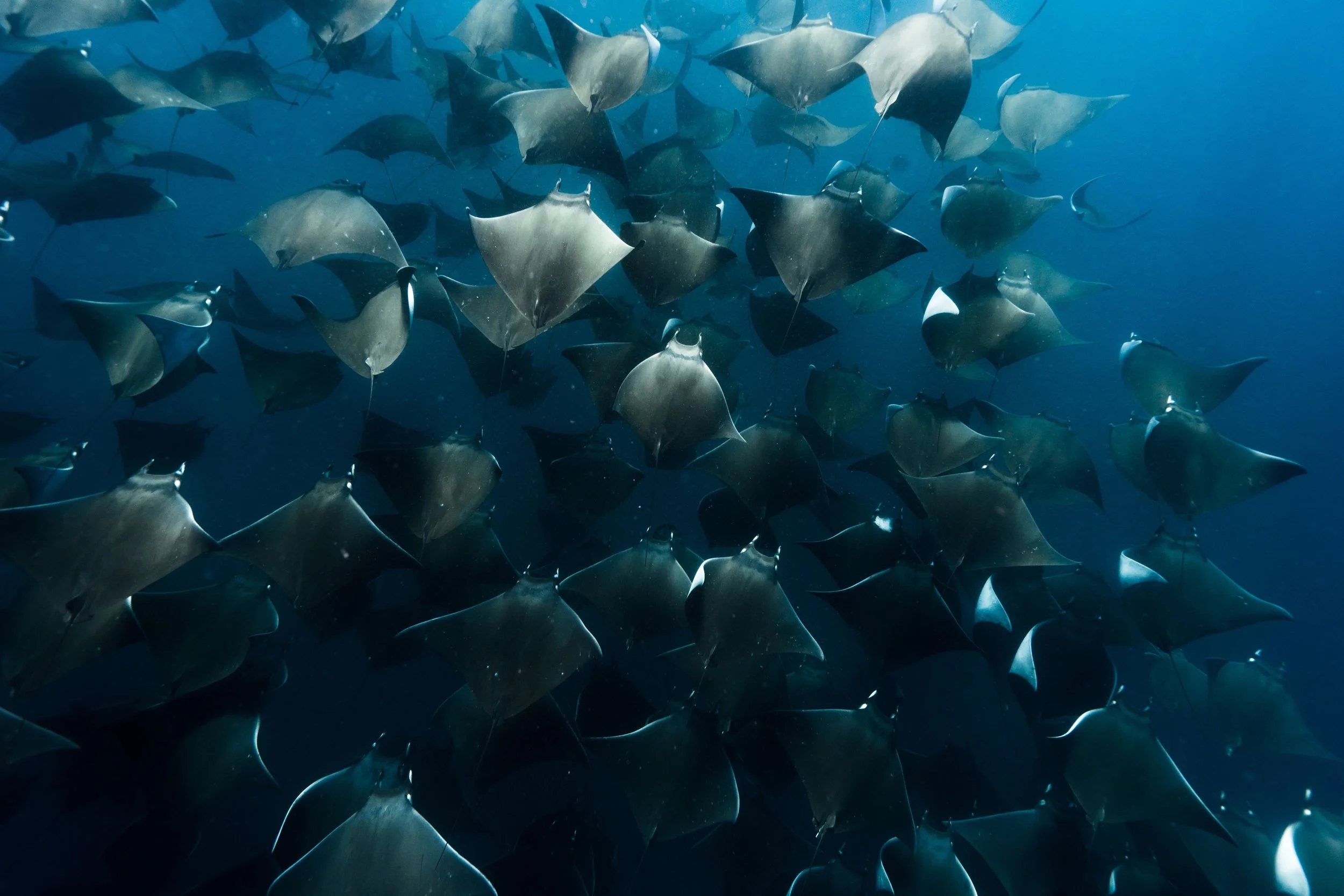
| Mobula Fever
Summer (July – September): The Tropical Aquarium
While the temperatures rise on land, the water becomes a crystal-clear paradise. For divers and snorkelers, this is the peak season.
The Stars: Massive schools of fish, Jack Crevalle, and Coral Reef life.
Where to go:
Cabo Pulmo National Park: This is the oldest living reef in the North Pacific. In summer, the water is "gin-clear" and warm (up to 80°F/27°C). You’ll feel like you’re swimming in a tropical fish tank.
La Paz: The whale sharks begin to arrive toward the end of summer.
Vanbaja Tip: In this season, use the ocean as your air conditioner! Park as close to the shoreline as possible to catch the evening sea breeze through the van's ventilation.
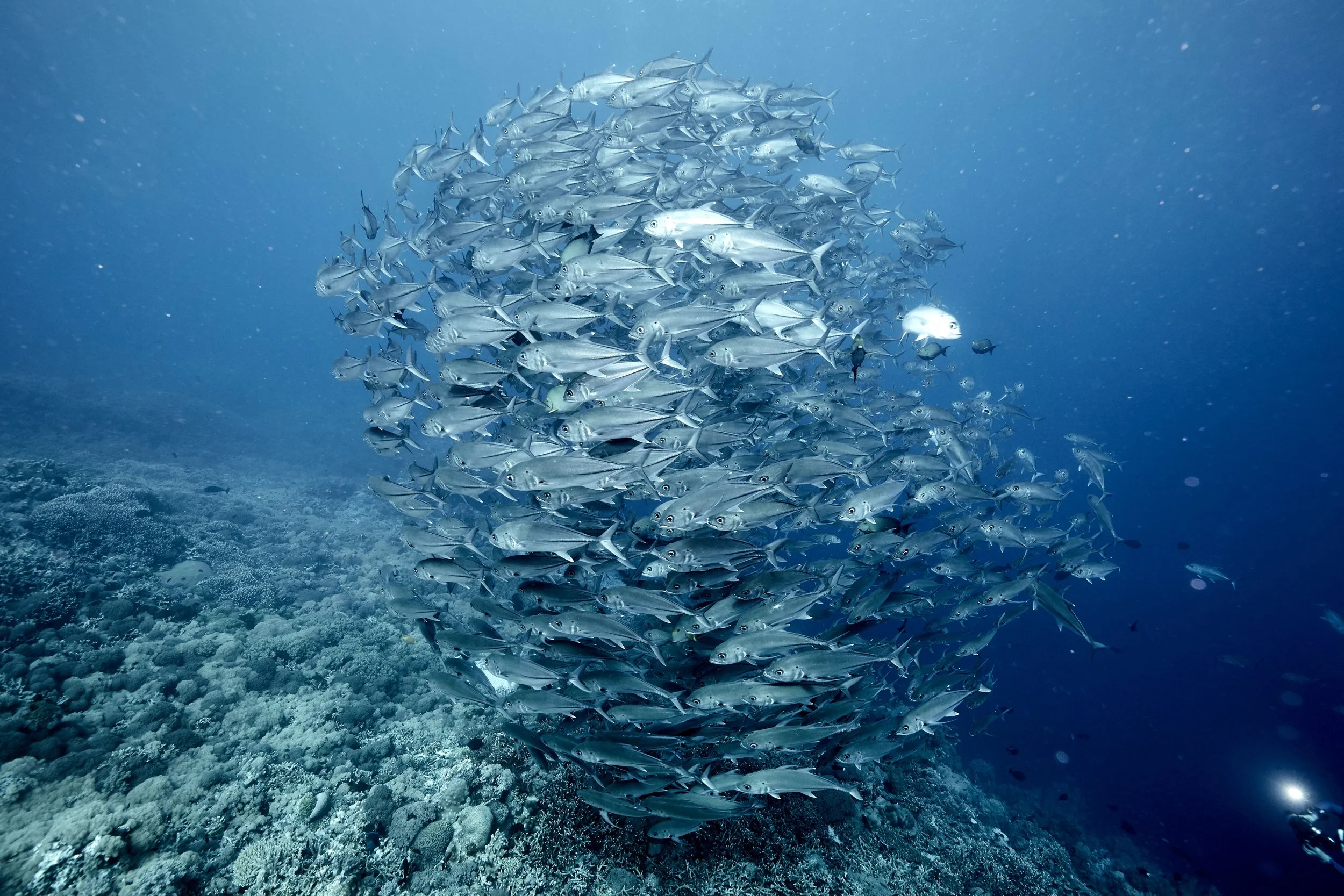
| School of Jack
Autumn (October – November): The Local’s Favorite
Ask any local, and they will tell you: Autumn is the absolute best time to be in Baja. By October, the hurricane season has passed, leaving the desert a vibrant, shocking green. The air begins to cool, but the water remains at its warmest, clearest, and most accessible state.
The Stars: The Sardine Run, Whale Sharks, and Sea Lion Pups.
Where to go:
Magdalena Bay (The Sardine Run): This is one of the most intense wildlife spectacles in the world. Thousands of sardines congregate, attracting Striped Marlin, sea lions, and birds in a high-energy "bait ball" feeding frenzy. If you are an underwater photographer or an adrenaline seeker, this is your season.
The Bay of La Paz: The "Gentle Giants" (Whale Sharks) are back in full force. Swimming alongside these bus-sized, polka-dotted creatures is a humbling, life-changing experience that feels completely peaceful.
Los Islotes: By autumn, the baby sea lions have grown into curious "teenagers." They are at their most playful now, don’t be surprised if they try to nibble on your fins or "dance" around you while you snorkel.
The Vibe: Everything is calm. The water is often "glassy" with no wind, the temperatures are perfect for sleeping in the van, and you will witness the most spectacular, fiery sunsets of the entire year.
Traveling with Respect: The Vanbaja Way
At Vanbaja, we believe that freedom comes with responsibility. We are guests in this "Aquarium of the World," and it is our duty to protect it so that future generations of nomads and locals can experience the same magic.
Observe, Don't Touch: Whether it’s a curious sea lion or a massive whale, always maintain a respectful distance. Never attempt to touch, feed, or ride the animals.
Use Reef-Safe Sunscreen: Traditional sunscreens contain chemicals (like oxybenzone) that bleach our beautiful corals. Switch to mineral-based, reef-safe alternatives.
Leave No Trace: When you park your van at a remote beach, ensure that the only thing you leave behind are your tire tracks in the sand. Pack out all your trash and a little extra if you find some on the shore.
Choose Responsible Tour Operators: Not all tours are created equal. We strongly encourage you to book only with certified operators who prioritize the well-being of the wildlife over "getting the shot." Avoid companies that chase, harass, or crowd the animals.
Planning your trip right now? Reach out to us. We would love to recommend our trusted local tour partners, the ones we personally know respect the animals and the environment as we do.Nature Sets the Schedule
While we can predict general migration patterns, it is important to remember that wildlife seasons are based on the months with the highest sighting rates, but they can change.
These animals follow their own ancient rhythms. Ocean conditions shift, water temperatures fluctuate, and some species may appear earlier or leave sooner depending on the year.
Part of the beauty of van-life is embracing this unpredictability. If the whales aren't in the bay today, perhaps the rays are jumping just around the corner. When you travel without a rigid itinerary, you are always in the right place at the right time.
Create Your Own Journey
The best part of a road trip in Baja is that the itinerary is never fixed. If the whales are moving north, you can follow. If the water is clearer ten miles down the coast, you can be there by sunset.
Ready to see the giants for yourself? Explore Baja at your own pace. Your campervan is waiting.
[Check Availability & Plan Your Adventure]
Take the "Aquarium of the World" in Your Pocket
We know that’s a lot of migrations, seasons, and spots to remember. And let’s be honest, when you’re deep in the desert or parked at a remote beach in Concepción Bay, you won't always have the signal to re-read this blog.
That’s why we created a Visual Marine Life Calendar over on our Instagram. It’s our most viral guide for a reason: it’s the ultimate "cheat sheet" for your road trip.
[Click here to see our Viral Marine Life Calendar]
Pro Tip: Click the "Save" icon on the post right now. That way, even when you’re completely off-grid in your Vanbaja campervan, you’ll have the exact dates and locations for the whales, rays, and sea lions right at your fingertips.
Follow us at @van.baja for daily views from the road and more insider tips to help you navigate the magic of Baja California Sur.