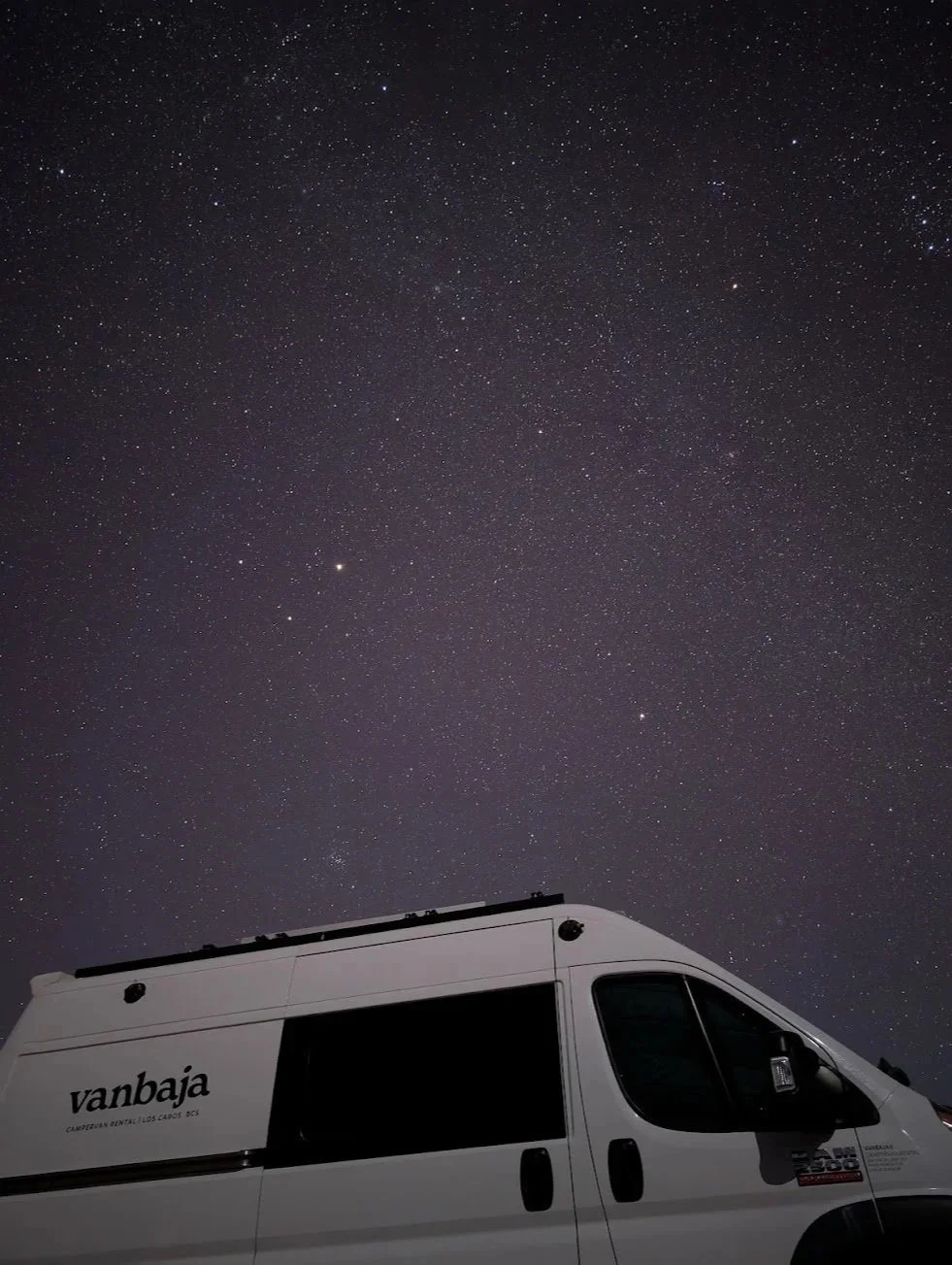
Where to Sleep in Baja: Beach Camping, 2WD Spots, and 4x4 Locations Explained
Introduction
One of the most common questions people ask when planning a Baja road trip is simple:
Where can you actually sleep in Baja?
The answer is part of what makes this place so special.
Baja California Sur offers something that is becoming harder to find in many parts of the world, freedom to explore and sleep close to nature. Long stretches of coastline, quiet desert landscapes, and small beach communities make it possible to spend the night in incredible places.
But not every spot is the same.
Some beaches are easy to access with any vehicle, while others require driving through soft sand or rough roads. Understanding the difference between 2WD friendly spots, soft sand areas, and 4x4 access locations can make your trip smoother and much more enjoyable.
The Reality of Sleeping in Baja
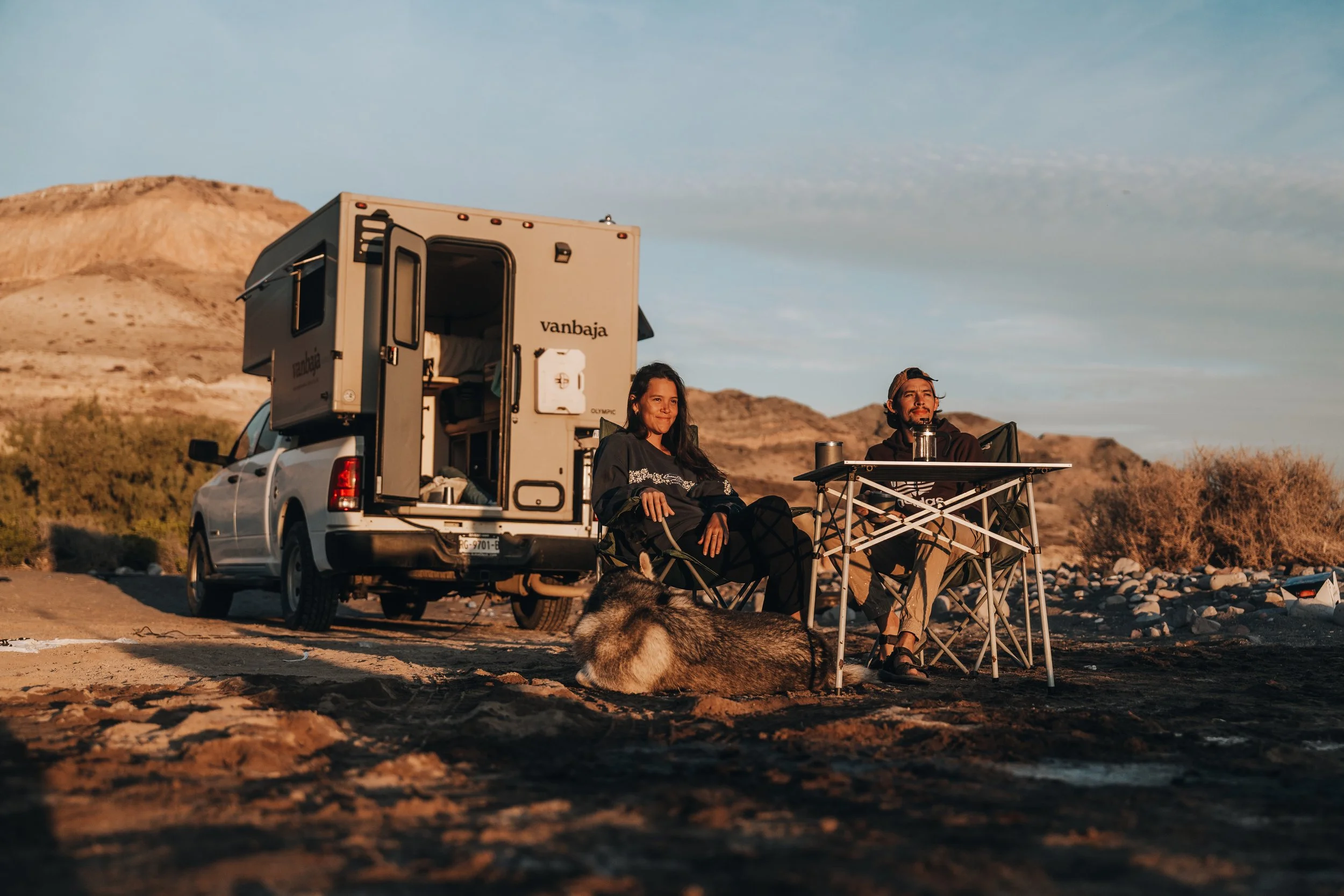
One reason Baja California Sur has become such a legendary road trip destination is its immense coastline. The peninsula stretches roughly 2,000 miles along the Pacific Ocean and the Sea of Cortez, offering countless places where travelers can camp near the water.
Beach camping here exists in many forms.
Some beaches are extremely remote, where you might not see another person for days. Others are popular gathering points where vans, trucks, and campers spend the night together. And many places fall somewhere in between.
Camping can sometimes be completely free, especially in remote areas. In other places, a local caretaker may come by to collect a small fee, usually around $10–$20 per night, particularly if there are palapas, trash collection, or basic facilities available.
Most beach camps in Baja are very simple, and bathrooms are uncommon. Travelers should always be prepared to be self-sufficient and respectful when it comes to waste and environmental impact.
2WD vs 4x4: What Your Vehicle Can Actually Handle
Not all Baja roads are the same.
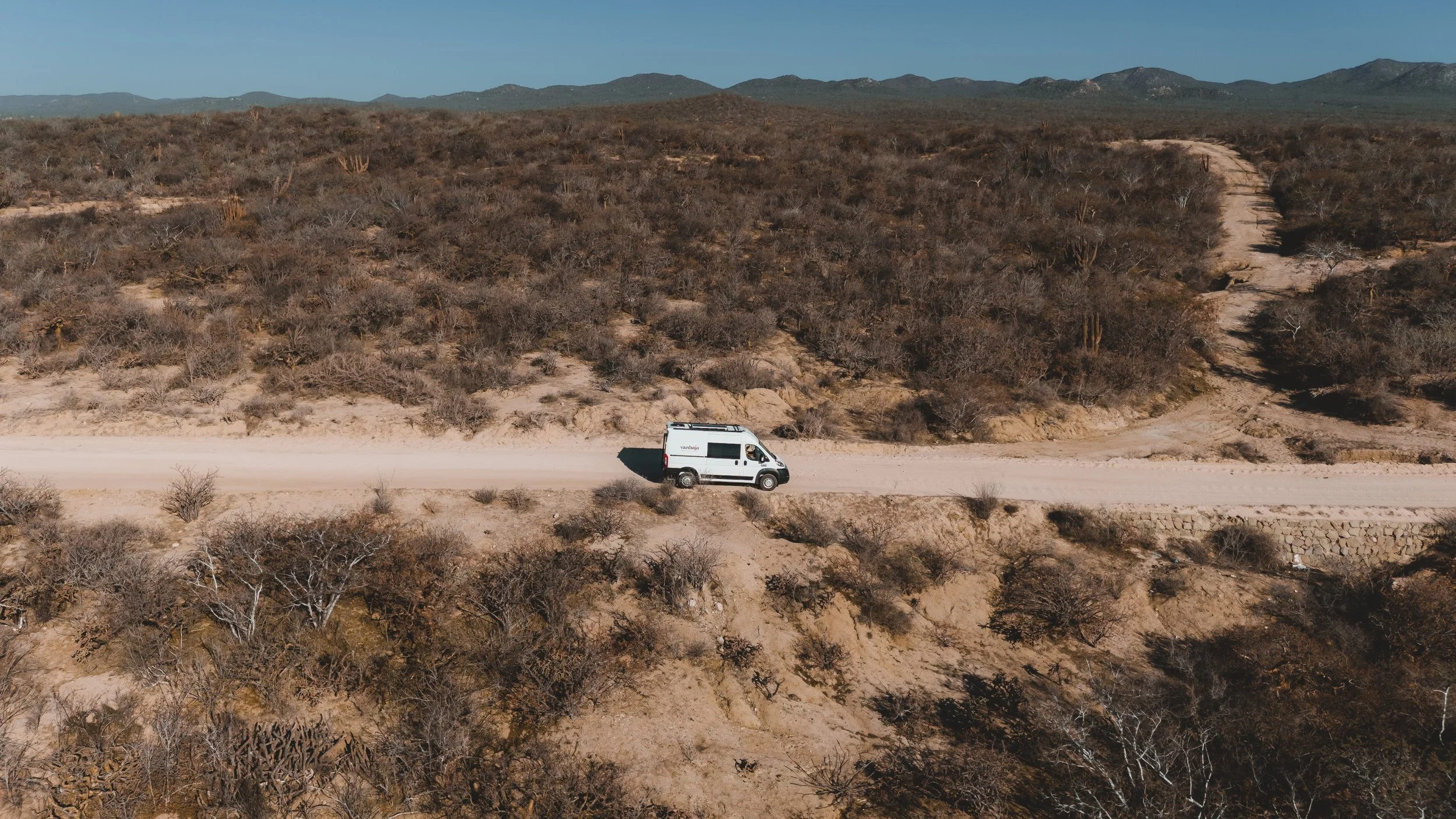
While the main highways are paved and easy to drive, many beach access roads turn into dirt tracks or sandy paths as you approach the coast.
Knowing what your vehicle can handle helps avoid unnecessary problems.
2WD Friendly Spots (Easy Access)
Many beautiful camping areas in Baja can be reached with standard vehicles, including campervans and regular cars.
These locations typically include:
- Dirt roads in good condition
- Hard-packed sand near the beach
- Easy access roads from main highways
Examples can be found near:
- La Paz
- Todos Santos
- Parts of East Cape
- Popular surf beaches
These spots are ideal for first-time Baja travelers who want great views without complicated driving conditions.
Soft Sand Areas
Some beaches are accessible with 2WD vehicles, but conditions can change quickly depending on tides, weather, and how much traffic has passed through.
In these areas you may encounter:
- Deep sand patches
- Loose terrain near the shoreline
- Limited turning space
Drivers often get stuck when they drive too close to the water or stop in deep sand.
If you’re unsure, the safest option is to park farther away and walk the rest of the distance.
4x4 Adventure Spots
Some of Baja’s most remote and beautiful beaches require four-wheel drive.
These areas may involve:
- Deep sand access roads
- Rocky desert tracks
- Steep coastal descents
- Remote surf breaks
The reward is fewer crowds and incredible landscapes, but these routes require preparation and confidence behind the wheel.
How Travelers Find Camping Spots in Baja
Over time, travelers have developed a few reliable ways to find places to sleep.
The most common tools include:
• iOverlander: one of the most widely used apps for finding camping spots, fuel stops, mechanics, and traveler updates.
• Offline maps such as Maps.me or Gaia GPS.
• Satellite view on Google Maps to identify beach access roads.
• Local knowledge from residents or other travelers on the road.
Even with technology, Baja is still a place where curiosity and conversation can lead you to the best locations.
Driving on Beaches in Baja
Driving on beaches is common in Baja, especially for fishermen launching boats or travelers setting up camp near the water.
However, there are important considerations.
Some areas restrict vehicle access to protect sea turtle nesting zones, which play an important role in Baja’s coastal ecosystems. If you see signs indicating restricted areas, respect them and park farther back.
It’s also important to check tides before parking close to the water. Overnight tides can move much farther up the beach than many travelers expect.
Practical Tips Before Sleeping on a Baja Beach
A few simple habits make a big difference when camping in Baja.
- Check tide charts before parking near the water.
- Arrive before sunset so you can assess the terrain safely.
- Avoid driving on dunes or fragile vegetation.
- Pack out all trash and respect the environment.
Baja’s openness exists because travelers and locals take care of it.
The Vanbaja Advantage
One of the benefits of traveling with us is having guidance on where to go and where not to.
Our team helps travelers understand:
- Which beaches are 2WD friendly
- Which areas have soft sand risks
- Which locations require 4x4 access
- And where you can safely spend the night
We also share local knowledge that doesn’t always appear on maps.
Because in Baja, the best places are often the ones you learn about from someone who knows the road.
FAQ — Sleeping in Baja
Can you sleep on beaches in Baja California Sur?
Yes. Many beaches allow overnight camping, especially outside protected parks and private property.
Do you need a 4x4 vehicle in Baja?
Not necessarily. Many incredible beaches are accessible with 2WD vehicles, but some remote areas require four-wheel drive.
Is beach camping safe in Baja?
Generally yes. Baja is known for its relaxed atmosphere, but travelers should always use common sense and respect local communities.
What is the best app to find camping spots in Baja?
Many travelers rely on iOverlander, which provides community-updated information about campsites and services.
To conclude
Sleeping in Baja isn’t just about finding a place to park.
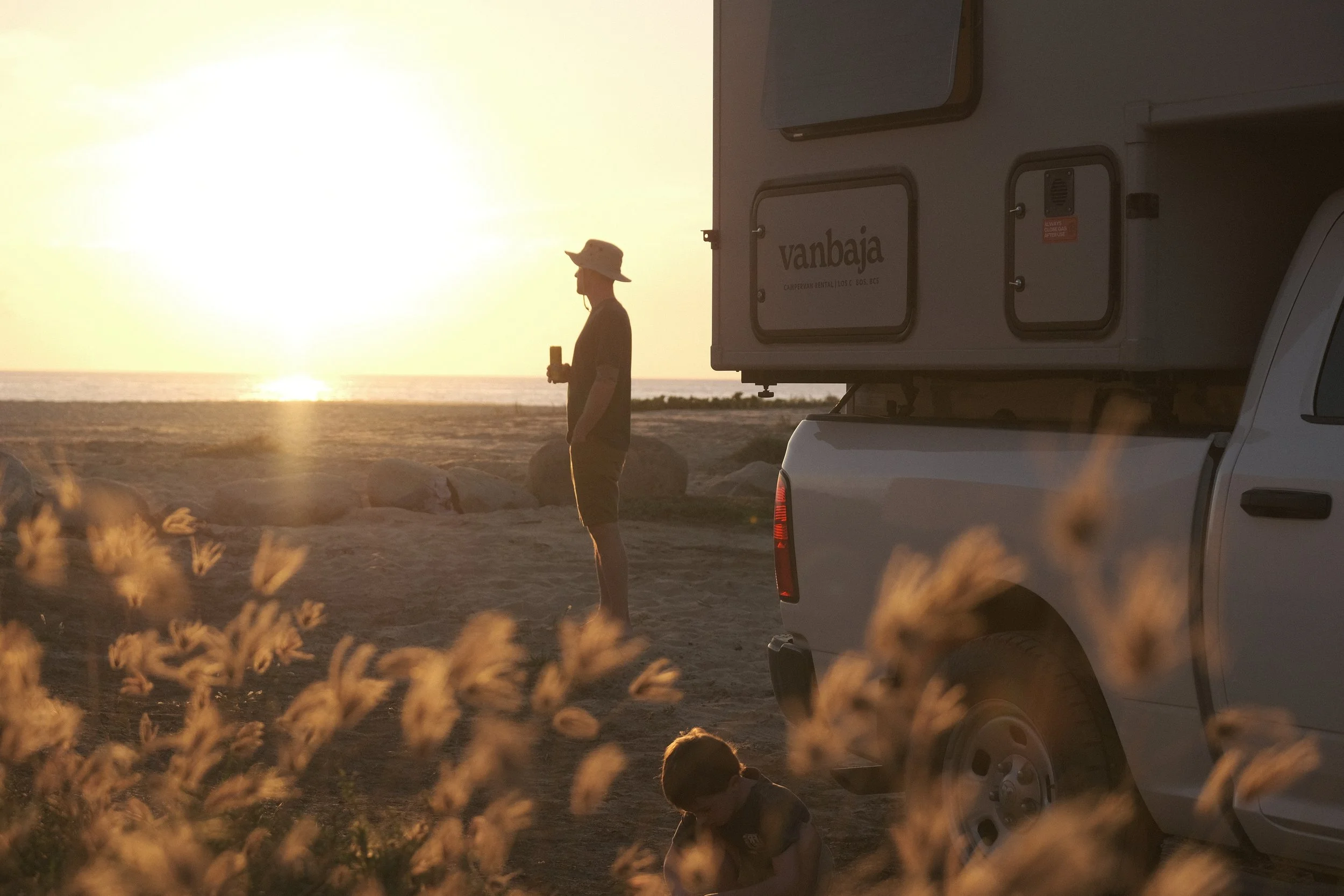
It’s about waking up with the ocean just steps away, watching desert light change at sunrise, and experiencing a kind of quiet that’s increasingly rare.
With preparation, respect, and a bit of curiosity, Baja offers something many places no longer do:
The freedom to choose your own horizon.
One of the things that makes Baja California so special is how open and wild it still feels. Many beaches, deserts, and coastal roads remain untouched, giving travelers the rare freedom to explore and spend the night surrounded by nature.
That freedom is a privilege.
Places like these stay beautiful because the people who visit them choose to care for them. Respecting wildlife, avoiding fragile dunes and vegetation, packing out trash, and leaving campsites exactly as you found them are small actions that make a big difference.
Baja California offers an incredible level of freedom for those who travel here.
And with that freedom comes the responsibility to protect the landscapes that make it possible.